A Bus Ride with Turks and Their Children
On a ferry in Istanbul, surrounded by the genetic tapestry of the Bosphorus, I realised we were all passengers on a bus with an ever-changing destination. The sign over the windscreen says "Turk", but the route—and who gets to board—has been repainted for over a millennium
CREATIVE PIECES
Brody L.
1/12/20268 min read
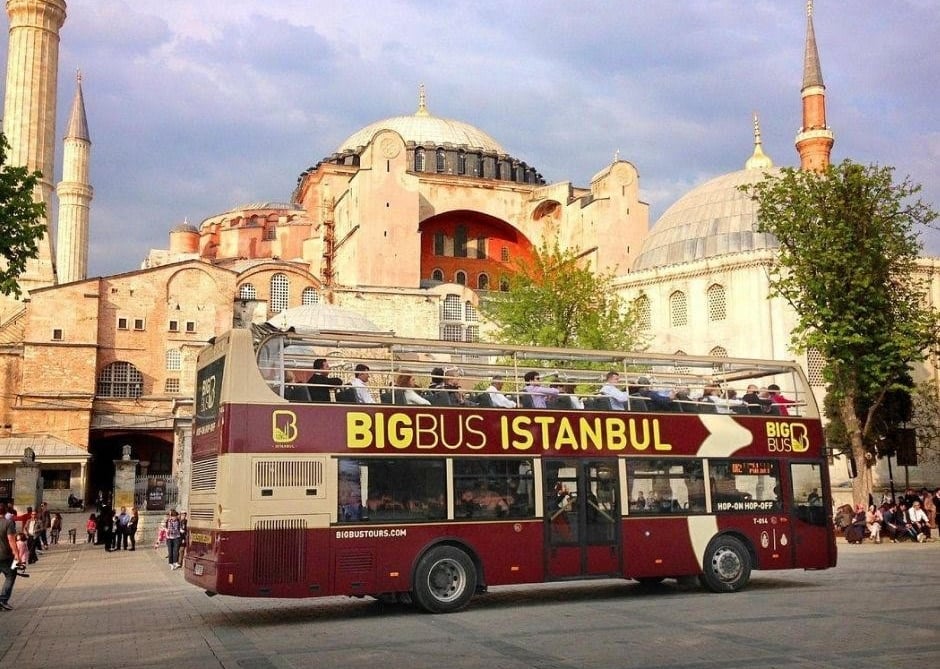
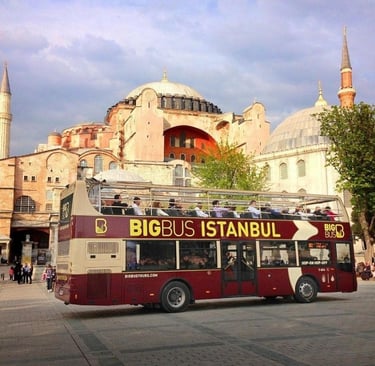
Not long ago, I travelled to Istanbul. Between the magnificent Süleymaniye Mosque and the towering Galata Tower, I floated on a ferry, with the eye-piercing blue waters of the Bosphorus surrounding us. Leaning against the deck railing, I watched people come and go, with even more people on the nearby pier. Passersby with Brown eyes, green eyes, and the occasional blue eyes. Noses of various shapes and sizes breathe the same air. Onyx has black, wheat-coloured, and even bleached blonde hair. Thousands of years ago, children of different ethnicities were scattered across various corners of the continent, isolated from each other, worshipping different gods, singing love songs in different languages, and building different structures. We find ourselves here, crammed onto a swaying ferry. Apart from myself, there are a couple speaking Russian loudly, and I believe the remaining individuals are Turkish. Wait, am I Turkish? As the classic joke goes, if you live anywhere between Turkey and Korea, odds are you’re Turkish. Berlin counts, don’t worry. Namely, linguistically speaking, people in the geo-continuum from Turkey to Korea are Turkic (Georg, Stefan, et al.). Sociologically speaking, that includes Berlin. The category seems to have stretched too far and broadened over time.
Yet, can the overgeneralisation and overuse of the Turkish concept really be blamed on Turkish historians or simply on Erdoğan’s cultural policies? (Taspinar)
As the ferry glided toward the European shore, we appreciated a poem by Victor Hugo, Sultan Ahmet, from his collection Les Orientales
À Juana la grenadine,
Qui toujours chante et badine,
Sultan Achmet dit un jour :
— Je donnerais sans retour
Mon royaume pour Médine,
Médine pour ton amour.
— Fais-toi chrétien, roi sublime !
Car il est illégitime,
Le plaisir qu'on a cherché
Aux bras d'un turc débauché.
J'aurais peur de faire un crime.
C'est bien assez du péché.
— Par ces perles dont la chaîne
Rehausse, ô ma souveraine,
Ton cou blanc comme le lait,
Je ferai ce qui te plaît,
Si tu veux bien que je prenne
Ton collier pour chapelet.
In English, it goes:
To Juana from Granada
Who sings and flirts all day,
Sultan Achmet once said :
I would gladly give away
My kingdom for Medina,
Trade Medina for your love.
- Become a Christian, o noble king!
For it stands against the law,
The pleasure one sought
In a depraved Turk's arms.
I would fear to commit a crime,
And sin I will go no further.
— I swear on these pearls whose chain
Brings out, o my sovereign,
The milky white of your neck,
That I will do as you please,
Provided you let me tell
These very beads in my prayers.
Source: French text from Desportes, Alexandre. “Poème Sultan Achmet - Victor Hugo.” Poésie-Française, 2025, www.poesie-francaise.fr/victor-hugo/poeme-sultan-achmet.php. English translation from Hugo, Victor. “Sultan Achmet (English Translation).” LyricsTranslate.com, 2017, lyricstranslate.com/en/sultan-achmet-sultan-ahmet.html.
His "Sultan Ahmed" speaks of a Turkic sultan who never existed. Anyone with a basic knowledge of European history knows that the Sultanate of Granada was a Muslim regime in mediaeval Spain, ruled by Arab-Berber people, with no connection to Turks or Turkish people (Kennedy).
However, such knowledge didn't stop Hugo from referring to the Sultan of Granada as a "Turk". Whether Hugo was genuinely ignorant or deliberately misleading, we may never know. But regardless of the reason, this poem demonstrates one fact: “Turkic” was an othering term.
In other words, “Turkic” was a label applied by others, not a self-proclaimed identity. To trace the root of this issue, we must go back to mediaeval times, to the rise and fall of the Turkic Khaganate.
Like other Steppe empires, the First Turkic Khaganate was called "Turkic" simply because the ruling tribe was Turkic. The vast majority of people ruled by the Turks were not Turkic and didn't consider themselves as such (Kennedy). Therefore, after the dissolution of a Steppe empire, the “former dynasty identity” as a political affiliation would disappear. The fall of the great steppe empires was final: the Xiongnu, the Xianbei, and the Rouran each vanished as entities upon their defeat, leaving no successor state to claim their political mantle (Barfield). The Turks seemed to have no reason to escape this pattern, and indeed, that’s how things initially developed.
After the Turkic Khaganate fell under the combined attack of the Tang Dynasty and the Uyghurs, the people of the Mongolian Plateau discarded the Turkic identity just as they had abandoned the Xiongnu, Xianbei, and Rouran identities. They readily accepted the new titles of the Uyghur Khaganate and its successors (Golden).
The Song Dynasty, emerging from the chaos of the Five Dynasties and Ten Kingdoms period, also left the Turks behind. The Chinese, familiar with the rules of the East Asian game, referred to the new northern powers as Khitan, Jurchen, and Mongol, with no one using the ancient term “Turk” anymore (Golden).
However, the exception for the Turks lay in its dual composition. While the 'Turkic' identity disappeared from the Mongolian plateau after the Eastern Turkic Khaganate fell, in Central Asia, the legacy of the Western Turkic Khaganate preserved the name in a distinctive way.
This form was used as a designation for "the other".
The Turkic Khaganate was the only regime before the Mongol Empire that simultaneously ruled both Central Asia and the Mongolian Plateau. This characteristic allowed the Turkic name to be preserved in Central Asia (Golden).
From a population standpoint, the Western Turkic Khaganate had minimal “Turkic content”. The vast majority of its subjects came from Central Asian nomadic tribes that had submitted to Turkic rule, making it even more diverse than its eastern counterpart. However, their diversity didn’t stop neighbouring people from calling them “Turks”.
More crucially, after the fall of the Western Turks, their former neighbours and rivals—the Persians, Indians, Slavs, Greeks, and Arabs—continued to call Central Asian nomads “turks,” entirely different from East Asia’s approach, and this practice persisted for over a millennium.
After the Western Turks left, the Byzantines continued to call the Pechenegs, Seljuks, and Ottomans “Turks”. Though their adversaries changed repeatedly, the term “Turk” endured, eventually passing from the Byzantines to the Slavs and Western Europeans (Kaegi).
The Persians and Arabs similarly embraced the term “Turk”, and the Central Asian people, as their Islamic brethren, came to accept and even take pride in this identity (Findley). For instance, Mahmud al-Kashgari, author of The Compendium of the Turkic Languages, praised Turkic glory in his work.
However, throughout the mediaeval period, “Turkic” wasn’t a prestigious designation. Not only did their adversaries – the Slavs and Crusaders – look down on them, but even their Muslim brethren, the Persians and Arabs, held them in contempt.
In Islamic cultural tradition, “Turk” became synonymous with slave, barbarian, illiterate, nomad, and warlord. Until the 15th century, literature in Chagatai Turkic barely emerged, remaining far below Persian and Arabic in status.
The Ottomans, known to modern people and contemporary Europeans as "Turks," also disdained the Turkish identity (Mantran). To Ottoman elites, the term “Turk” was practically an insult.
The empire traditionally exiled Eastern Turkmen nomads to places like Cyprus. For the noble "Ottomans", the "Turks" seemed like creatures from an inferior world.
In the western half of Eurasia, though the Turkic name survived, it lacked precision. Meaning that it functioned solely as a tool for authorities to marginalise others. This tool was as crude as the Asian term “Frank” (佛郎机)—any Western European Christian could be called a Frank, regardless of their Latin or Germanic origins or Catholic or Protestant faith (Lewis).
As a label, “Turkic” remained a concept with unclear boundaries from mediaeval times to modernity.
However, this crude tool eventually became a spark. In the 19th century, amid rampaging colonialism and flourishing nationalism, the meaning of “Turkic” was reinvented (Landau). Intellectuals from Russian colonies were the first to seize this handle. They needed a common identity to unite the scattered colonial peoples within Imperial Russia, and “Turkic” was the only label that could encompass most of them.
Crimeans, Kazanis, Nogais, Kazakhs, Uzbeks, Turkmens, Kyrgyz, Yakuts… their greatest and almost only commonality was being called “Turks”.
Colonial intellectuals actively networked, readily invented various myths, and promoted the “Turkic” national cause. Like all contemporary salvation-seekers, they passionately established schools, called for reforms, and wrote extensively.
Meanwhile, European archaeology and Oriental studies became the second pivot for reinventing “Turkic” meaning. Western European scholars, particularly German and Austro-Hungarian archaeologists, combined the era’s prevalent romanticism and Orientalist bias to name a collection of Inner Asian languages the “Turkic language family” and even a larger “Altaic language family” (note that the Altai Mountains were the ancient Turks’ homeland) (Said). From the perspective of art history, Romanticism was a reaction against rationalism and represented a return to the ideals of the "new mediaeval" period. The mediaeval term “Turk” had by now completely transformed.
The concept of “Turkic” rapidly expanded due to the dual effects of colonisers’ “othering” and the colonised’s “self-othering”. Ottoman and Russian “Turkic” intellectuals began discussing and even asserting that the Huns were a “Turkic-speaking people” and thus Turkic ancestors (Landau). Such claims would have been inconceivable in mediaeval times or East Asian tradition.
In the early 20th century, Ottoman Empire reformers established the Young Turks party, and the Ottoman elite’s contempt for Turks rapidly became “a thing of the past” (Findley). In 1923, the Republic of Turkey was established. At the 10th anniversary celebration in 1933, Kemal made his widely quoted statement in Turkey: “How happy is one who says, ‘I am a Turk’?” (“Ne mutlu Türk’üm diyene”) (Findley).
By the mid-20th century, the transformation and expansion of the “Turkic” concept had become irreversible. Extremely exaggerated national myths and complex identity politics have accompanied this new concept since the 19th century. The Turkish historian Carter Vaughn Findley (2010), in his book Turkey, Islam, Nationalism, and Modernity: A History, 1789-2007, offers a metaphor about the Turks: The Turks are like a bus, travelling across the intercontinental plates of Asia from east to west. None of the passengers care where the bus started or where it's headed; they're just along for the ride... And by the time this bus finally reaches Istanbul, both the passengers and the parts of the vehicle have been replaced, yet the bus is still called Turkish, and the passengers all call themselves Turks.
A modern Turk's claim to be a direct, pure descendant of mediaeval Turkic steppe empires is a foundational national myth—akin to a modern Englishman's claim to Anglo-Saxon descent. However, in our timeline, the Middle East and Central Asia were colonised, marginalised, and otherised, not Western Europe. Thus, the former became a mobilising political reality, while the latter remained a source of intellectual debate.
Nobel laureate Turkish author Orhan Pamuk, in his masterpiece My Name is Red, tells this story through a character (Pamuk):
“Once upon a time, two Franks were walking on a Frank prairie…”
Isn’t this opening itself a satire of Orientalism? In some parallel universe, might there be poets calling the Polish king a vile Frank?
Perhaps we are all passengers on that bus, calling ourselves by names others once gave us. Along the way, power and knowledge create each other; the results might be absurd but not laughable.
Bibliography
Barfield, Thomas. The Perilous Frontier: Nomadic Empires and China, 221 B.C. to A.D. 1757. Blackwell, 1989.
Desportes, Alexandre. “Poème Sultan Achmet - Victor Hugo.” Poésie-Française, 2025, www.poesie-francaise.fr/victor-hugo/poeme-sultan-achmet.php.
Findley, Carter Vaughn. Turkey, Islam, Nationalism, and Modernity: A History, 1789–2007. Yale UP, 2010.
Georg, Stefan, et al. “Telling General Linguists about Altaic.” Journal of Linguistics, vol. 35, no. 1, 1999, pp. 65–98. Cambridge Core, https://doi.org/10.1017/s0022226798007312.
Golden, Peter B. Central Asia in World History. Oxford UP, 2011.
An Introduction to the History of the Turkic Peoples. Otto Harrassowitz, 1992.
Hugo, Victor. “Sultan Achmet (English Translation).” LyricsTranslate.com, 2017, lyricstranslate.com/en/sultan-achmet-sultan-ahmet.html.
Kaegi, Walter E. Byzantium and the Early Islamic Conquests. Cambridge UP, 1992.
Kennedy, Hugh. Muslim Spain and Portugal. Routledge, 1996. DOI.org (Crossref), https://doi.org/10.4324/9781315836287.
Landau, Jacob M. Pan-Turkism: From Irredentism to Cooperation. Indiana UP, 1995.
Lewis, Bernard. Islam and the West. Oxford UP, 1993.
Mantran, Robert. Review of The Cambridge History of Islam, edited by P.M. Holt et al. Journal of the Economic and Social History of the Orient, vol. 13, no. 3, 1970, pp. 328–35. JSTOR, https://doi.org/10.2307/3595988.
Mustafa Kemal Atatürk. Onuncu Yıl Nutku [10th Anniversary Speech]. 29 Oct. 1933. Republic of Turkey Ministry of Culture and Tourism, 5 Oct. 2025, https://www.ktb.gov.tr/TR-96294/10-yil-nutku.html.
Pamuk, Orhan. My Name Is Red. Translated by E. M. Göknar, Alfred A. Knopf, 1998.
Said, Edward W. Orientalism. Pantheon Books, 1978.
Taşpınar, Ömer. “Turkey’s Middle East Policies: Between Neo-Ottomanism and Kemalism.” Carnegie Endowment for International Peace, 2008, carnegieendowment.org/research/2008/10/turkeys-middle-east-policies-between-neo-ottomanism-and-kemalism?lang=en.