The weight of concrete, the weight of conscience: the Serbian protests 1/3
It started with outrage—and grew into one of Serbia’s most significant protest waves in years. This installment breaks down the forces that sparked the demonstrations, the narratives that shaped them, and the political tensions that continue to ripple throughout the country.
SERBIAN PROTESTS
Vita A.
1/20/202612 min read
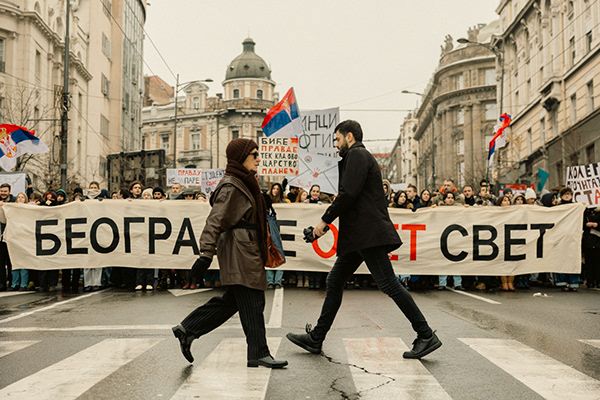
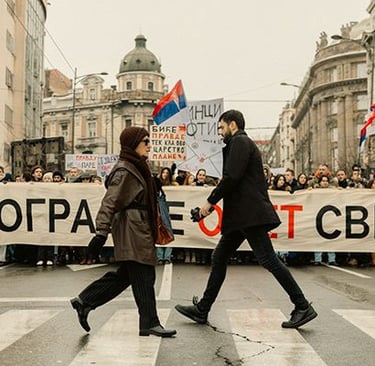
The death toll of 16 civilians was the final straw for the people of Serbia. Haunted by decades of widespread corruption, the public retaliates by initiating a series of protests that would last 11 months, shut down the entire education system and parts of public infrastructure, and mark the largest public gathering in Serbia’s modern history, counting almost half a million people on the night of March 15th (Balunovic). Students led these protests, striving to maintain peace while demanding accountability from the government. Those courageous students who spearheaded the protests received a nomination for the 2025 Nobel Peace Prize (De Launey). The Government responded with brutality and the use of a sonic weapon on protestors (De Launey) The protests are still going on to this day, and the situation is escalating.
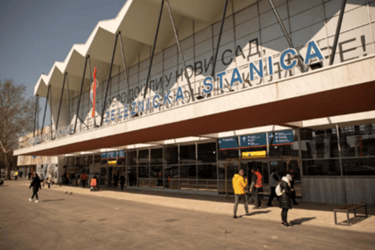
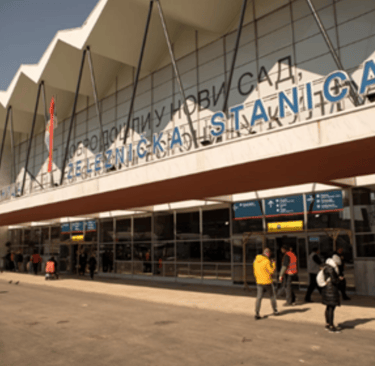
The collapse of the Novi Sad train station
The railway station in Novi Sad was first constructed in 1964 and was an original creation of architect Imre Farkas and his associates from the “Architect” design studio. The station was built in just eight months.
The reconstruction of the station started in October of 2021. It was ceremonially opened for the first time during the height of the election campaign in the spring of 2022, only to be closed again shortly afterward due to ongoing construction work. The second, and what was supposed to be the final, opening of the station occurred on July 5, 2024, only three months before its collapse. In addition to high-ranking city officials and Mayor Milan Đurić, the opening was attended by the Minister of Construction, Transport, and Infrastructure, Goran Vesić, as well as the President of the Provincial Government, Maja Gojković. (Latas)
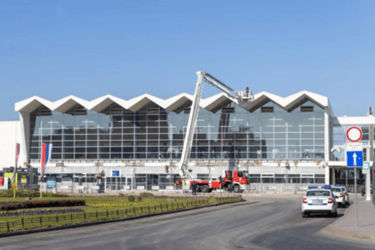
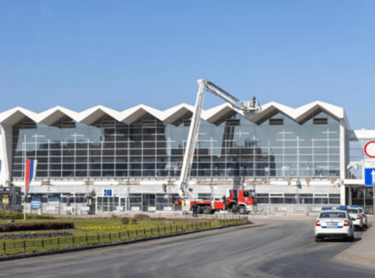
On the first of November 2024, at 11:52, the concrete roof of the railway station, weighing around 300 tonnes, collapsed and in an instant ended the lives of fourteen people and, at that time, injured three. In later months, another two victims would succumb to their injuries, bringing the death toll to sixteen people ("Death Toll from Serbia's Station Roof Collapse"). Among those who died were children aged six, ten, sixteen, and seventeen. ("Ovo Su Priče")
Post-tragedy, the authorities were very quick to denounce that the whole station had been reconstructed except for the roof of the station. However, the opposition and experts were very vocal about the government's lack of transparency and alleged manipulation. They reviewed pre-collapse photos and videos and found that the roof had also been altered and rebuilt. “If it hadn’t been worked on, it wouldn’t have collapsed—it would have lasted much longer,” says Radomir Folić, professor emeritus and retired faculty member from the Faculty of Technical Sciences in Novi Sad, who revealed this information in an interview with the BBC (Radenković Jeremić and Čovs). Following the incident, the Minister of Construction, Transport, and Infrastructure, Goran Vesić, resigned a few days later. At a press conference on November 4, Vesić stated, “I cannot accept blame for the deaths of 14 people. Neither I nor my team bear any responsibility for what happened.” (Vesić, qtd. in Ahmatović). Prime Minister Vučević accepted Vesić's resignation, adding that he was certain Vesić was not personally to blame for the November 1 incident. On November 21, prosecutors in Novi Sad announced the arrest of 11 individuals suspected of negligence in the reconstruction works. (Ogarević) Although names were not officially released, media reports claimed Vesić was among those arrested (Beograd and Tatalovic). Vesić later stated on social media that he was not arrested but had voluntarily responded to a police summons (Beograd and Tatalovic). At the moment of writing, more than half a year after the accident, Vesić is not an imprisoned man.
Experts reviewing the construction documents determined only a small portion of the relevant documentation was released. “We are nowhere near having the full documentation, as the crucial parts are still absent,” says a member of the Inquiry Committee for Investigating Responsibility for the Canopy Collapse in Novi Sad ("Koji Dokumenti"). Nevertheless, this small portion allowed them to identify critical gaps and missing documents. Civil engineer Danijel Dašić explained that the primary cause of the canopy’s collapse was severe overloading, resulting in the tension cables breaking and the structure ultimately failing (Čonjagić) The addition of 23 extra tonnes to the canopy during railway reconstruction exceeded the permitted load capacity of these cables (Dašić). Further examinations revealed that many contractors and subcontractors involved in the project lacked prior experience or expertise in building construction (Dašić). Of the 200 companies hired, only 75 held the necessary competence certification required by law. Dašić also pointed out that the original contract’s cost rose from €1.9 million to €5.1 million by November 2023, suggesting corruption at high levels (Dašić). He cited the incompetence of the contractors, the irresponsibility of project managers and overseers, and the political pressure to finish the project quickly for a ceremonial opening ahead of elections (Dašić). There are reasons to believe that after the price of the contract was raised, a lot of taxpayer money that went into the reconstruction of the railway station was funnelled through these unauthorised subcontractors to private accounts of high officials. In turn, the lack of that money meant that the quality of work and materials for the reconstruction was significantly poorer, leading the people of Serbia towards a catastrophe that would wake up the nation.
First wave of protests
The first dramatic shift in the situation occurred on November 22nd when students from the Faculty of Dramatic Arts gathered in front of their faculty for 14 minutes of silence to pay tribute to the fourteen victims of the canopy collapse at Novi Sad. It's important to note that the students did this alongside blocking the traffic, which angered some of the drivers who got out of their vehicles, and after verbally attacking the students, a physical confrontation followed, resulting in several students having to receive medical treatment (Milovanović). From the accounts of students and reporters who were on the scene and filmed the altercation, it was not difficult to deduce that the event was an organized action, with several drivers having ties to the ruling political party Serbian Progressive Party (SNS). The organized group included Milija Kodžić, Aleksandar Jokić, Dušan Kostić, Milena Aleksić, and Ivan Stanišić (Dašić).
After the incident, students demanded that the Ministry of Internal Affairs (MUP) confirm these individuals' identities and file criminal charges against them with the competent public prosecutor’s office in Belgrade (Studentski Zahtevi) They also demanded that other members of the organized group involved in the attack on students be identified and sanctioned, that Milija Kodžić be dismissed from his position as a council member of the New Belgrade city municipality, and that the competent body of Elektrodistribucija Beograd (EDB) initiates disciplinary proceedings against Aleksandar Jokić, coordinator of the Belgrade distribution area (Studentski Zahtevi). On November 25, students of the Faculty of Dramatic Arts collectively voted to blockade their faculty, pledging to continue until the relevant authorities meet their four demands ("Blokada FDU")
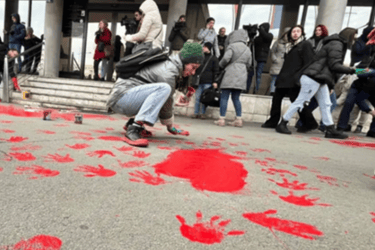
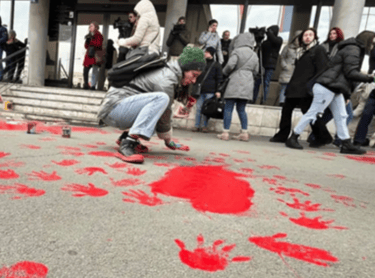
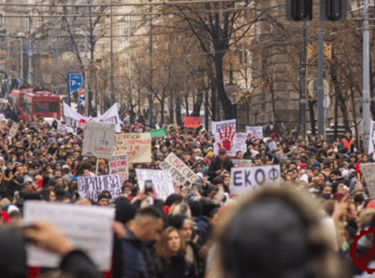
The vote was the start of a massive wave of protests in major cities, where protestors would spill red paint on the streets and dye their hands red while chanting “Ruke su vam krvave”, which effectively translates to “You have blood on your hands”, referring to the government. Since December 2nd, one after the other, almost every single University in Serbia joined the blockades (more than 85 faculties), followed by a majority of high schools (Gruhonjic). The students would occupy their universities until June 2025, closing the doors to the media and public, requiring a valid student ID to enter. There would always be someone at the university, guarding the building, with classrooms accommodated as sleeping rooms. Proud citizens and parents didn’t hesitate for a second to show their support for the students by bringing them donations and standing by them, as they would block traffic every Friday in multiple locations at exactly 11:52 for the fifteen minutes of silence for the victims (“Srbijo, pomozi studentima”). It is important to note that all the protests organised by students were of a peaceful and nonviolent nature.
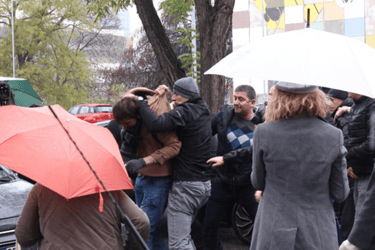
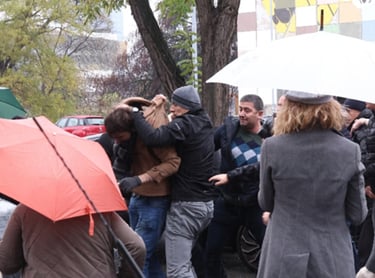
However, the peaceful protests were increasingly disrupted day by day by hooded individuals, while citizens were being detained by plainclothes police officers who concealed their faces and refused to identify themselves. Soon, the “official” governmental narrative shifted to portray the protests as orchestrated by paid mercenaries acting under orders from foreign powers and aided by the opposition, supposedly aiming to topple both the government and the state (N1 Beograd). Accountability for the collapsed canopy was replaced with accusations of attempting to destabilise the entire nation. Those who lost their lives were remembered mostly on Fridays. Such blockades were routinely disrupted by allegedly random passers-by and vehicles that would deliberately drive through crowds, increasingly running over protesters. Students remained cautious, clearly distancing themselves from party politics from the very beginning and insisting that they did not wish to be aligned with the opposition. In late November a leaked audio recording allegedly featuring senior SNS (Serbian Progressive Party) official Damir Zobenica captured him urging party Members of the group insulted and attacked the protestors who were blocking the roads (Jakonic). Zobenica resigned shortly after the recording surfaced.
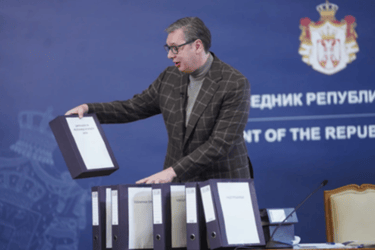
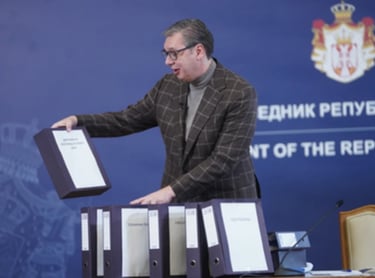
On the eleventh of December, the president of Serbia, Aleksandar Vučić, made a public announcement for the nation. During the live broadcast, students gathered in front of the presidency building, whistling and shouting to drown out the president's speech. During this charade, which lasted way longer than an average Serb’s patience, the president announced the release of ‘full documentation' of the Novi Sad railway station's reconstruction, a 20% budget raise for higher education, the release of protestors imprisoned during many of the protests, and new housing loans for young people. (Vučić) With all of these gestures and “ensuring” that justice would be served for the tragedy, the president claimed that all the demands are now met, and the blockades should stop.
The students responded with the following statement: “The students demanded the complete documentation regarding the reconstruction of the Novi Sad railway station be published.” (sviublokade.fdu). “Other state authorities partially released the documents shortly afterward.” ("Vlada Srbije Počela") Our colleagues from technical faculties and the Serbian Association of Architects pointed out that the released documents do not include important information needed to figure out who is responsible for any crimes related to the station's reconstruction. Specifically missing are the contracts detailing who performed specific tasks on the railway station, the associated costs, reasons why the reconstruction price increased fivefold, and who was responsible for the fact that the railway station was ceremonially opened twice without an occupancy permit.” ("Beogradski Građevinski")
The experts and the public did not perceive the published documentation, in which the president took great pride, as sufficient, so the blockades continued and even increased in the number of protesting faculties. For the first time, the president heard from the students, something that was completely new to him, as David Delimedjac stated in the interview for Utisak Nedelje, “The President of the Republic is not authorised to deal with this, and the demands were not addressed to him at all. That speech he gave was a direct violation of the Constitution. I think what bothers him the most is that we no longer pay any attention to him, we are addressing our demands directly to the institutions and putting pressure on the system and on the institutions that are actually responsible for answering our questions” (“Utisak Nedelje: Milica Pendić”; “Utisak Nedelje - Milica Pendić”). Another feeling strongly shared by the student representatives during this interview was that the Initiative for Subsidised First-Time Home Purchases for Youth Under 35, which President Vucic announced during his national appearance on December 11th, was a calculated attempt to placate and distract public opinion. The students I interviewed described the move as a humiliating experience, “like tossing a bone to keep us quiet”. The students raised suspicions that the housing loan offer appeared less like genuine support and more like a tactic to sway the parents into silencing student demands.
Increased action: tens of thousands gather to protest
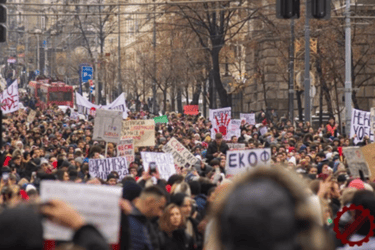
The first massive protest took place in Slavija Square in Belgrade on December 22nd, exactly a month after the initial attack on the students. The police report declared that the protest saw around 28 to 29 thousand people, but the Archive of Public Gatherings estimated at least 2–3 times the number of people than officially reported (Skupova). Actors, athletes, and other public figures, not to mention the diaspora, visibly supported this protest throughout the country. The protest started with a magnificent 15 minutes of silence, where the whole square and its surroundings were filled with people standing side by side, fighting for a brighter future in silence. It ended with a message from students: 'Stay with us, we have just begun.'
Another moment that illustrated the students’ seriousness and determination followed on December 25th when, on the initiative of the University of Belgrade Faculty of Law, a march was organized to the Office of the Republic Public Prosecutor, where the participants delivered one thousand letters to the Republic Prosecutor, Zagorka Dolovac. This symbolic march was intended to remind the Republic Prosecutor Dolovac of an oath she took when she assumed the position and that the students expect her to stand for law and justice, not for politics and corruption, as she has repeatedly done. After this, the students reiterated the demands they had addressed to the Prosecutor’s Office. The Prosecutor offered the students the option to appoint five or six delegates to enter the building, but the students replied that there would be no negotiations; fulfilling their demand would suffice (Vukajlović).
Bibliography
Ahmatović, Šejla. “Serbian Minister Resigns after Train Station Collapse.” Politico, 5 Nov. 2024, www.politico.eu/article/goran-vesic-serbia-novi-sad-construction-railway-station-collapse/.
ARHIV JAVNIH SKUPOVA. “Veliki Protest na Slaviji.” Javni Skupovi, 22 Dec. 2024, javniskupovi.org/index.php/2024/12/22/veliki-protest-na-slaviji/.
Balunović, Filip. “Serbia’s Student Movement Offers Hope in Dark Times.” Jacobin, 2025, jacobin.com/2025/03/serbia-student-movement-authoritarianism-protest.
Čonjagić, Marko. “Građevinski Inženjer Objasnio Kako Je Došlo do Rušenja Nadstrešnice u Novom Sadu.” Danas, Nov. 2024, www.danas.rs/vesti/drustvo/gradjevinski-inzenjer-objasnio-kako-je-doslo-do-rusenja-nadstresnice-u-novom-sadu/.
De Launey, Guy. “Serbia’s Largest-Ever Rally Sees 325,000 Protest against Government.” BBC News, 15 Mar. 2025, www.bbc.com/news/articles/cx2g8v32q30o.
“Death Toll from Serbia’s Station Roof Collapse in November Rises to 16.” Le Monde, 21 Mar. 2025, www.lemonde.fr/en/international/article/2025/03/21/death-toll-from-serbia-s-station-roof-collapse-in-november-rises-to-16_6739387_4.html.
Gruhonjić, Dinko. “Ko Sve Ovih Dana Spava ‘Tamo Gde Uči’: Spisak Svih Fakulteta i Srednjih Škola u Blokadi.” Autonomija, 26 Dec. 2024, autonomija.info/ko-sve-ovih-dana-spava-tamo-gde-uci-spisak-svih-fakulteta-i-srednjih-skola-u-blokadi/.
“INTERVJU Danijel Dašić: Za Pad Nadstrešnice Treba da Odgovaraju Jedan Predsednik Države, Dva Predsednika Vlade i Tri Ministra Građevine.” NOVA, Feb. 2025, nova.rs/vesti/drustvo/intervju-danijel-dasic-o-padu-nadstresnice-u-novom-sadu/.
Jakonić, Tamara. “Marinika Tepić Objavila Snimak: Damir Zobenica Instruira SNS Aktiviste da Izazovu Incidente i Vređaju Opoziciju.” Autonomija, 28 Nov. 2024, autonomija.info/marinika-tepic-objavila-snimak-damir-zobenica-instruira-sns-aktiviste-da-izazovu-incidente-i-vredjaju-opoziciju/.
Latas, Aleksandar. “Železnička Stanica u Novom Sadu Rekonstruisana i Svečano Otvorena po Drugi Put.” Danas, 5 July 2024, www.danas.rs/vesti/ekonomija/zeleznicka-stanica-u-novom-sadu-rekonstruisana-i-svecano-otvorena-po-drugi-put/.
Milovanović, Tanja. “Posle 26 Dana Identifikovali Napadače na Studente FDU Koje Je Videla Cela Srbija i Saslušaće ih Tek 2025.” NOVA, 19 Dec. 2024, nova.rs/vesti/hronika/posle-26-dana-identifikovali-napadace-na-studente-fdu-koje-je-videla-cela-srbija-i-saslusace-ih-tek-2025-da-li-tuzilastvo-ovako-gasi-pozar/.
N1. “Koji Dokumenti o Padu Nadstrešnice Fale: Ovo Je Najnovija Analiza.” NOVA, 26 Feb. 2025, nova.rs/vesti/drustvo/koji-dokumenati-o-padu-nadstresnice-fale-ovo-je-najnovija-analiza-i-otkriva-koliki-je-javasluk-sns-vlasti/.
N1 Beograd. “Vučić: Evropski Ološ Koji Je Došao da Ruši Našu Zemlju Biće Procesuiran.” N1 Info, 5 Sept. 2025, n1info.rs/vesti/vucic-evropski-olos-koji-je-dosao-da-rusi-nasu-zemlju-bice-procesuiran-u-skladu-sa-zakonima-srbije/.
N1 Beograd, and Žaklina Tatalović. “Goran Vesić Među Uhapšenima, Kaže da Se Dobrovoljno Odazvao.” N1, 21 Nov. 2024, n1info.rs/vesti/vesic-medju-uhapsenima/.
Ogarević, Iva. “Uhapšeno 11 Osoba zbog Pada Nadstrešnice u Novom Sadu.” NOVA, 21 Nov. 2024, nova.rs/vesti/hronika/uhapseno-11-osoba-zbog-pada-nadstresnice-u-novom-sadu-oglasilo-se-vise-javno-tuzilastvo/.
“Ovo Su Priče o 16 Žrtava Pada Nadstrešnice: Najstarija Imala 77 Godina, Najmlađa Samo 5.” Blic, Nov. 2025, www.blic.rs/vesti/hronika/ovo-su-price-o-16-zrtava-pada-nadstresnice-najstarija-imala-77-godina-najmladja-samo/zxe3n8k.
Radio Slobodna Evropa. “Beogradski Građevinski Fakultet Objavio Šta Nedostaje od Dokumentacije o Železničkoj Stanici.” Radio Slobodna Evropa, 25 Jan. 2025, www.slobodnaevropa.org/a/zeleznicka-stanica-dokumentacija-gradjevinski-fakultet/33288684.html.
Radenković Jeremić, Milica, and Lazar Čovs. “Fekalije, Suzavac i Minut Ćutanja: Kako Je Izgledao Protest u Novom Sadu.” BBC News na srpskom, 8 Nov. 2024, www.bbc.com/serbian/articles/c3de1de093vo/lat.
“Srbijo, pomozi studentima: Objavljena lista potrebnih stvari za blokade.” 6yka, n.d., https://6yka.com/bih/srbijo-pomozi-studentima-objavljena-lista-potrebnih-stvari-za-blokade/.
STUDENTSKI ZAHTEVI. “Serbian Students’ Demands amid University Sit-Ins.” Studentski Zahtevi, 2024, studentskizahtevi.rs/lat/.
sviublokade.fdu. “Saopštenje Studenata Fakulteta Dramskih Umetnosti.” Instagram, 18 Dec. 2024, www.instagram.com/p/DDuma_TKZNf/.
TV Nova. “Blokada FDU, Studenti Traže da Policija Utvrdi Ko Su Batinaši.” NOVA, 27 Nov. 2024, nova.rs/emisije/blokada-fdu-studenti-traze-da-policija-utvrdi-ko-su-batinasi/.
TV Nova. “Nova Dokumenta: Zašto Je Nadstrešnica na Železničkoj Stanici Pala? – Danijel Dašić.” NOVA, 31 Jan. 2025, nova.rs/emisije/nova-dokumenta-zasto-je-nadstresnica-na-zeleznickoj-stanici-pala-danijel-dasic/.
TV Nova. “Utisak Nedelje – Milica Pendić, Luka Vuksanović i Davud Delimeđac.” NOVA, 17 Dec. 2024, nova.rs/emisije/utisak-nedelje-milica-pendic-luka-vuksanovic-i-david-delimedjac/.
Vlada Srbije Počela s Objavljivanjem Dokumenata o Rekonstrukciji Železničke Stanice Novi Sad.” NOVA, 12 Dec. 2024, nova.rs/vesti/politika/vlada-srbije-pocela-s-objavljivanjem-dokumenata-o-rekonstrukciji-zeleznicke-stanice-novi-sad/.
Vučić, Aleksandar. “Obraćanje Predsednika Građanima: Aleksandar Vučić o Temama od Izuzetne Važnosti za Srbiju.” YouTube, 11 Dec. 2024, www.youtube.com/watch?v=cNxmrOcjzOY.
Vukajlović, Nađa. “Zagorka Dolovac Prihvatila Pismo Studenata, Pozvala ih na Razgovor.” Danas, 25 Dec. 2024, www.danas.rs/vesti/drustvo/studenti-zagorka-dolovac-1000-pisama/.
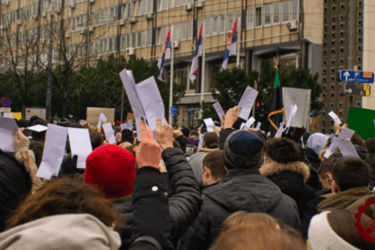
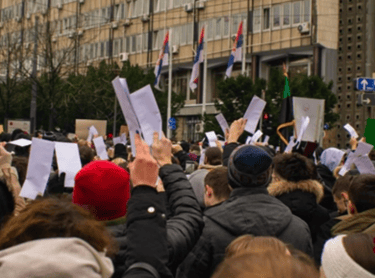
Photo by @studenti_u_blokadi
Photo by IBALKAN
Photo by BBC/SVETLANA PARAMENTIĆ
Photo by @studenti_u_blokadi
Photo by Nova.rs
Railway station after the collapse , Photo by IBALKAN
Railway station before the collapse, Photo by Mitar Mitrović / Ringier