The weight of concrete, the weight of conscience: the Serbian protests 3/3
The movement came to embody a deeper crisis, one that asked whether Serbia could meaningfully serve its citizens under the rule of law and democratic accountability. While a temporary lull followed in late 2025, the protests never faded, spilling into the new year and underscoring that the resistance had outgrown any single moment or tactic. The struggle was, and remains, far from over.
SERBIAN PROTESTS
Vita A.
2/3/202611 min read
Protests against government-backed media
On the 14th of April, students and their supporters initiated a significant protest by blockading the headquarters of Radio Television of Serbia (RTS) in Belgrade, accusing the state broadcaster of deliberately misrepresenting or ignoring crucial aspects of the ongoing anti-corruption and pro-democracy demonstrations (NIN). Tents and banners were set up around the RTS building, with protesters calling for media accountability, transparency, and reforms, including the appointment of a new, unbiased Media Regulatory Council (REM) (Vijesti.me). Students and citizens maintained a continuous, round-the-clock presence during the approximately two-week blockade, ensuring there was always someone on guard in front of RTS. To keep morale high, students regularly organized gatherings, accompanied by music and entertainment programmes, and even celebrated Easter together in front of the RTS building . Ultimately, the protest achieved a notable concession: parliament committed to restarting the process for appointing REM members, meeting one of the demonstrators' key demands (BTA). This blockade not only symbolised a strategic shift toward institutional challenges but also highlighted the students' organisational strengths and dedication to securing genuine democratic reforms in Serbia.
Run from Novi Sad to Brussels: 2000km for democracy
On the 25th of April, the runners' campaign to Brussels began, which was another symbolic relay-style marathon organised by Serbian students and activists to draw international attention to corruption, repression, and democratic deficits in Serbia (“Serbian students arrive in Brussels”). Participants ran in stages from Serbia to Brussels, personally delivering letters and testimonies to European Union institutions upon arrival (“Serbian Students Meet MEPs”). The campaign combined athletic endurance with powerful civic advocacy, emphasising solidarity and perseverance, as well as the need for international support in their struggle for justice and transparency (Serbian students arrive in Brussels).
The month of May saw several developments. On Labour Day, thousands of people gathered in Belgrade and Novi Sad to mark six months since the collapse of the Novi Sad station canopy. Following the protest, politicians intensified their pressure to formally include early parliamentary elections among their core demands. Protest delegations presented this demand to EU institutions and publicly urged a democratic reset. Demonstrations continued in Belgrade, Novi Sad, Kraljevo, and Niš, highlighting the unjust imprisonment of multiple activists. Protesters clashed with riot police, who used pepper spray, as they demanded their release. Amid heavy rain, thousands also protested against government attempts to curb university autonomy, including disciplinary actions against professors and proposed changes to educational laws.
The first elections since the protestors took to the streets were the local elections held on June 8th in the Serbian municipalities of Zajecar and Kosjeric. The national protest movement, which included university blockades and “Serbia against violence” rallies, created an atmosphere of historic social mobilisation and public discontent with the ruling authorities. Consequently, the 2025 local elections in Zaječar and Kosjerić were considered a high-stakes litmus test for President Aleksandar Vučić’s ruling Serbian Progressive Party (SNS) and the strength of the newly energised opposition (“Local elections in Serbia reveal cracks in Vučić’s rule”). Opposition groups framed the vote as a chance to challenge SNS’s decade-long dominance in these locales (SNS had governed Zaječar and Kosjerić continuously for about 10 years prior). These two relatively small communities drew nationwide attention, as many viewed their elections as bellwethers for the country’s political direction amid the ongoing crisis. Both Zaječar and Kosjerić recorded an exceptionally high voter turnout, reflecting intense public interest and mobilisation (“CRTA: High voter turnout so far”).
The result in Zaječar was a narrow victory for the SNS-led list, which will have 27 of the 50 councillors – a slim majority of one seat if opposition parties are considered jointly. This time, the opposition nearly closed the gap, a fact acknowledged by observers. CRTA (Centre for Research, Transparency and Accountability; a Serbian election watchdog) noted that by their monitored tally, SNS earned 27 mandates vs. 23 for opposition lists but emphasised that the election results do not “reflect the will of the voters due to irregularities" ("Preliminary Assessment"). No outright winner was immediately secured in Kosjerić due to the razor-thin margin. Initially, both camps claimed victory: the “United for Kosjerić” group announced they believed they had won just after polls closed, while President Vučić likewise proclaimed an SNS victory shortly thereafter (“Local elections in Serbia reveal cracks in Vučić’s rule”). Official preliminary results gave the SNS list a one-seat lead (14-13). However, the process did not end on election night. Citing the 51-vote difference and numerous reported irregularities, the opposition filed complaints. By mid-June, Kosjerić’s Municipal Election Commission and courts annulled the results at one polling station after evidence emerged that an ineligible person had been allowed to vote there. A repeat election at that polling site was scheduled (ultimately for 1 July 2025)—meaning the outcome in Kosjerić remained in flux as of late June. In any case, the near 50–50 split in Kosjerić stands as one of the closest and most suspenseful local election results in Serbian history, vividly illustrating the country’s political divide (“Local elections in Serbia reveal cracks in Vučić’s rule”).
Election day, June 8, 2025, was marred by numerous reports of irregularities and incidents, clouding the close results. CRTA's preliminary analysis revealed that the elections were neither free nor fair, with widespread pressure and fear creating a "state of siege" atmosphere. Observers documented voter intimidation, vote-buying, misuse of public resources, and procedural abuses both during the campaign and on election day ("Preliminary Assessment"). Significantly, CRTA reported that irregularities (of varying severity) occurred at 86% of polling stations in Zaječar and 55% in Kosjerić – an astonishingly high proportion (“CRTA: High voter turnout so far”). CRTA observers caught polling board officials inserting pre-marked ballots into boxes at one station (handing voters already-filled ballots). At several locations, observers noted that UV lamps and ink sprays—meant to prevent multiple votes—were misused or not used at all, enabling the same person to vote more than once. Additionally, there were instances of open vote buying. CRTA and opposition observers claim to have witnessed money being handed to voters near at least three Zaječar polling sites and immediately reported this to police with sworn statements ("Preliminary Assessment").
The Turning Point
June 28th is a significant day for Serbian nationals. The importance of this holiday, known as Vidovdan, stems from historical events, of which the most prominent ones were the Battle of Kosovo (1389), the martyrdom of Prince Lazar (1371–1389), and the collapse of the Serbian Empire. Knowing this, it is safe to say that the students’ announcement for a big protest on Slavija Square on Vidovdan carried a lot of weight. Frustrated by government inaction, students have been calling for elections since May, and this protest symbolised the end of their time. Ahead of the protest, organisers issued an “ultimatum” for President Vučić to announce elections by 9 PM (19:00 GMT)—a demand he had rejected well before the deadline ("What Threatens Vučić"). Hours before the protest at Slavija Square, Vučić’s party sent in buses of its supporters from other parts of the country, many wearing T-shirts reading: “We won’t give up Serbia.” The loyalists gathered in front of the National Assembly (sandwiched in between the National Assembly and Ćaciland), where, in a heavily nationalistic tone, they celebrated the holiday with disproportionate amounts of food, drinks, and music, while enjoying the police “protection” and segregation from the protest.
The protest itself started peacefully around 6 PM and included sixteen minutes of silence, noise, and multiple speeches. The rally was attended by about 140,000 people, according to the Independent Protest Monitor, Archive of Public Gatherings, and was one of the largest in the student-led demonstrations ("Archive of Public Gatherings: 140,000 People in Slavija"). The organisers announced that the protest would officially end at 9 PM. Around that time, a significant number of protestors peacefully dispersed. A certain controversy rose at the end of one of the speeches; when the “time ran out”, the speaker announced a green light for the protestors. Students therefore declared themselves “participants, not leaders” and invited local assemblies – parent councils, resident associations, and disability-rights groups – to choose goals; however, this statement was manipulated by the authorities as an excuse for the use of excessive force right after the protest. “There will be no negotiations with terrorists and those who seek to overthrow Serbia,” said Vučić ("Serbian Anti-Government").
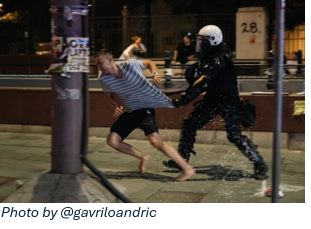
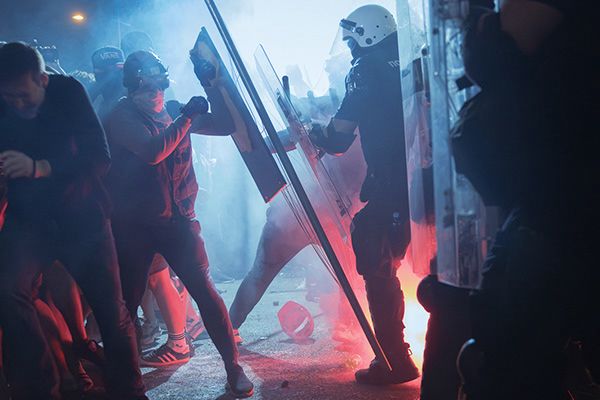
As midnight approached, the situation escalated. Citizens began overturning trash containers, insulting the police, and shouting, “Lower your shields.” The police soon responded by deploying tear gas and pepper spray before resorting to physical assaults and making arrests ("Dozens Injured and Arrested"). They then began driving the crowd toward Slavija. Officers from both the police and the gendarmerie charged at them with their shields, causing occasional stampedes as the gathered citizens fell back before the advancing cordons. It is also important to mention that there are some credible speculations that the provocations toward the police (which is allegedly the reason for their brutality) were organised by the ruling party in government through the use of individuals posing as protestors.
According to the Higher Public Prosecutor’s Office, “due to attacks on the police during tonight’s protest,” detention has been ordered for twelve individuals. Police Director Dragan Vasiljević had earlier stated that “several dozen hooligans were detained” and that six officers and two civilians were injured, with “minimal use of force” ("Dozens Injured and Arrested”). However, footage from photojournalists, television broadcasts, and social media showed many more injured citizens as well as some brutal arrests ("Dozens Injured and Arrested”).
Commenting on the scenes from Vidovdan, political scientist Cvijetin Milivojević pointed out that we’re seeing images like these eight months into the protests because “only one normal thing should have been done - for the president of the republic to be just the president of the republic and not the absolute master of all three branches of power.” Speaking on Insajder TV, he assessed that incidents after the Vidovdan protest “only serve Aleksandar Vučić and his ruling coalition, whose approval rating is falling,” and that they’re orchestrated “to portray the other side as the one destroying the state.” ("Milivojević: Očekivao sam incidente, interes da se dese imao predsednik Vučić")
Civil unrest
In the days following this brutal government repression, the movement evolved beyond just a student protest, taking shape as broader civic action and civil disobedience. The reaction unfolded on the streets of Belgrade, Novi Sad, Niš, Šabac, and several other cities, where students, supported by citizens organized in assemblies, blocked roads and intersections. In the capital alone, dozens of blockades were set up, with containers and fences halting traffic on streets (“Thousands set up street blockades in Serbia after arrests of anti‑government protesters”). The barricades extend from Zemun and Panevo Bridge to Autokomanda and the highway at Gazela Bridge. The so-called 'mobile barricades' on the roads are being spontaneously set up by informal citizens' assemblies, responding to calls from students who, for the past seven months, have been blocking dozens of faculties across Serbia and leading mass protests. The beginning of the police operation to dismantle barricades on June 30 in Belgrade was marked by arrests, accompanied by accusations from protesting students that police had used excessive force (“Thousands set up street blockades in Serbia after arrests of anti‑government protesters”).
The month of July was undoubtedly marked by significant civic effort in the form of civil disobedience. Citizens demonstrated their persistence and desire for change through actions ranging from setting up mobile barricades, which shifted locations whenever police appeared, to constantly crossing pedestrian crossings to halt traffic and blocking streets with containers to stage afternoon and nighttime blockades at intersections. Despite the intense heat during the day, people maintained their resolve. However, these efforts came with considerable risks, including arrest, harassment, and physical violence by police. Early July saw some of the harshest confrontations occurring at night or in the early morning hours during blockades planned to last up to 24 hours. On July 3rd, helmeted gendarmes without any insignia dragged students across the Law Faculty’s marble foyer; four were hospitalised with broken bones. Seventy-nine arrests were reported nationwide. Unfortunately, citizens were unsafe even during daytime, as numerous students, or those simply resembling students, were arrested in broad daylight while walking on the street without any provocation by plainclothes inspectors who almost never identified themselves.
As of early August, the situation on the ground has somewhat calmed, though protests and barricades persist – albeit at a reduced scale. The wave of arrests has also eased recently. Several university faculties are now facilitating both entrance tests and regular examinations for students who participated in the blockade, signalling a partial return to academic routines. It has been more than eight months since the student-led blockades began, and what initially emerged as a response to the Novi Sad canopy collapse has evolved into a broader struggle over the legitimacy and democratic integrity of the Serbian state. The movement now embodies a deeper crisis—one that asks whether Serbia can meaningfully serve its citizens under the rule of law and democratic accountability. Despite the temporary lull, expectations remain high that the resistance will regain full momentum in September in 2025. The struggle is far from over.
Bibliography
BTA. “RTS Blockade Lifted, Serbian Government Appoints New Competition for Members of Regulatory Authority for Electronic Media.” Bulgarian News Agency, 29 Apr. 2025, www.bta.bg/en/news/balkans/880612-rts-blockade-lifted-serbian-government-appoints-new-competition-for-members-of-.
NIN. “Students Block RTS, Gendarmerie Interrupts Blockade of RTV Building.” NIN, 15 Apr. 2025, www.nin.rs/english/news/74233/blockade-of-rts-students-in-front-of-radio-television-of-serbia.
Vijesti.me. “Belgrade: Students in Blockade Confirm They Will Remain in Front of RTS Until the Election of the New REM Council.” Vijesti, 20 Apr. 2025, en.vijesti.me/world-a/balkan/755261/belgrade-students-in-blockade-confirm-they-will-remain-in-front-of-rts-until-the-election-of-the-new-rem-council
“Serbian Students Arrive in Brussels after 2,000 km Ultramarathon for Democracy.” Belga News Agency, 13 May 2025, www.belganewsagency.eu/serbian-students-arrive-in-brussels-after-2000km-ultramarathon-for-democracy.
BTA. “Serbian Students Meet MEPs after Protest Marathon to Brussels.” BTA, 13 May 2025, www.bta.bg/en/news/balkans/889592-serbian-students-meet-meps-after-protest-marathon-to-brussels.
CRTA. “Preliminary Assessment of the Electoral Process in Kosjerić and Zaječar – Election Day Neither Free nor Fair.” CRTA, 11 June 2025, crta.rs/en/preliminary-assessment-of-the-electoral-process-in-kosjeric-and-zajecar-election-day-neither-free-nor-fair/
NIN. “CRTA: High Voter Turnout so Far, More Irregularities in Zaječar than in Kosjerić.” NIN, 8 June 2025, www.nin.rs/english/news/79833/crta-high-voter-turnout-so-far-more-irregularities-in-zajecar-than-in-kosjeric.
European Western Balkans. “Local Elections in Serbia Reveal Cracks in Vučić’s Rule Despite Unfair Conditions.” European Western Balkans, 11 June 2025, europeanwesternbalkans.com/2025/06/11/local-elections-in-serbia-reveal-cracks-in-vucics-rule-despite-unfair-conditions/
“Archive of Public Gatherings: 140,000 People in Slavija.” Vreme, 28 June 2025, vreme.com/en/vesti/arhiv-javnih-skupova-140-000-ljudi-na-slaviji/
“Dozens Injured and Arrested: Video Footage Contradicts Police Director and Reasons for Intervention!” Serbian Times, 28 June 2025, serbiantimes.info/en/dozens-injured-and-arrested-video-footage-contradicts-police-director-and-reasons-for-intervention-disturbing-scenes-in-downtown-belgrade-video-photo/
“What Threatens Vučić if He Rejects the Serbian Students’ Ultimatum.” European Pravda, 3 July 2025, www.eurointegration.com.ua/eng/news/2025/07/3/7215122/.
“Serbian Anti-Government Groups Return to Streets, Demand Release of Detained Protesters.” Radio Free Europe/Radio Liberty, 30 June 2025, www.rferl.org/a/serbia-vucic-protest-belgrade-student/33457899.html.
“Milivojević: Očekivao Sam Incidente, Interes da se Dese Imao Predsednik Vučić.” Insajder, insajder.net/teme/cvijetin-milivojevic-ocekivao-sam-incidente-interes-da-se-dese-imao-predsednik-vucic-video
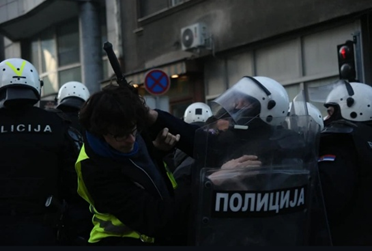
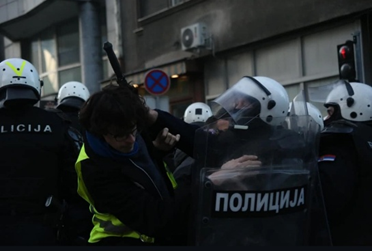
Photo by @studenti_u_blokadi
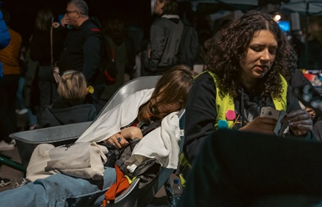
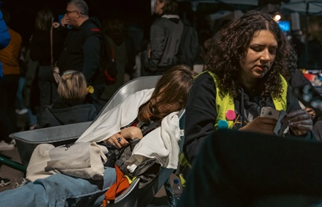
Photo by @studenti_u_blokadi
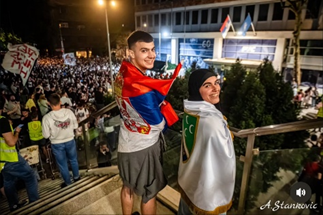
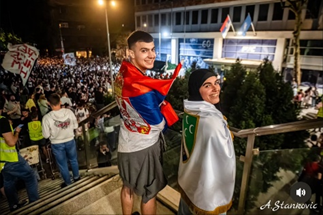
Photo by @studenti_u_blokadi
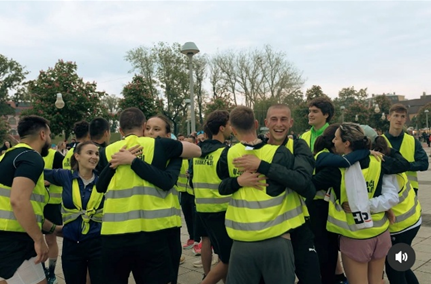
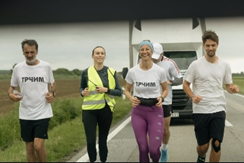
Photo by @studenti_u_blokadi
Photo by @studenti_u_blokadi
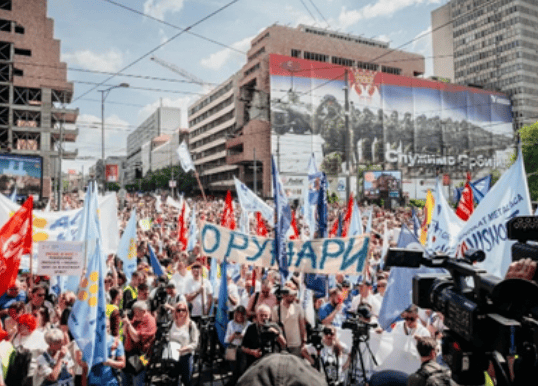
Photo by @studenti_u_blokadi
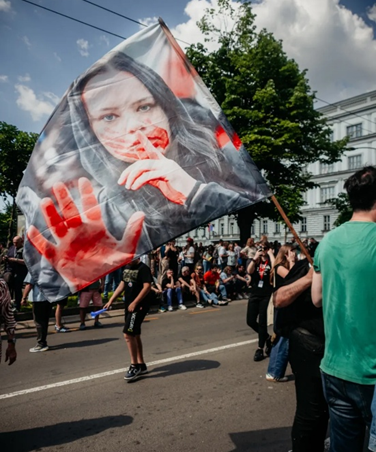
Photo by @studenti_u_blokadi
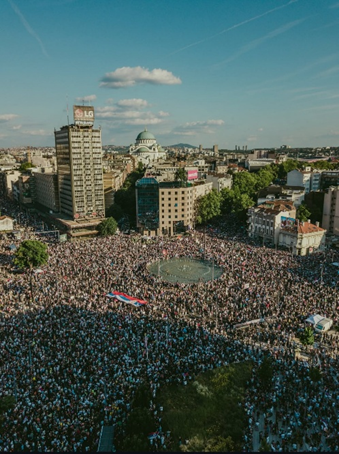
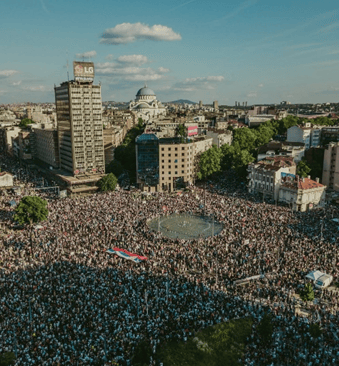
Photo by @cuvarivatre
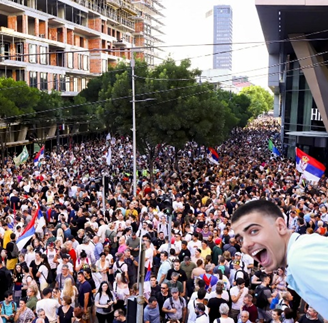
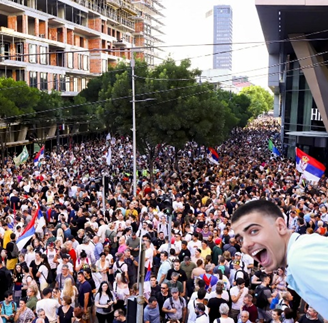
Photo by @cuvarivatre
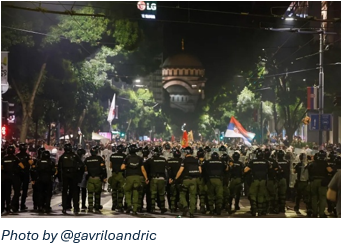
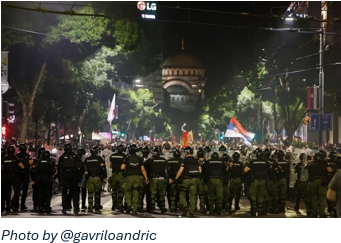
Photo by @gavriloandric
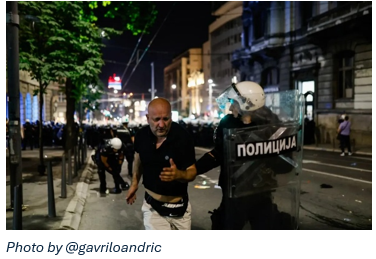
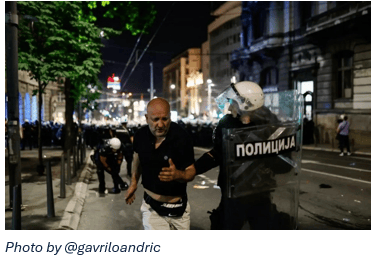
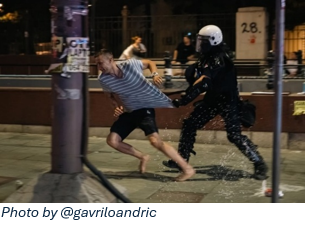
Photo by @gavriloandric
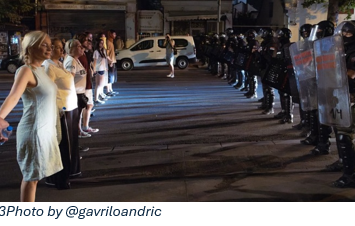
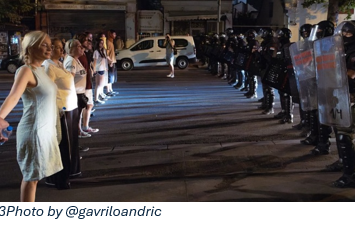
Photo by @gavriloandric
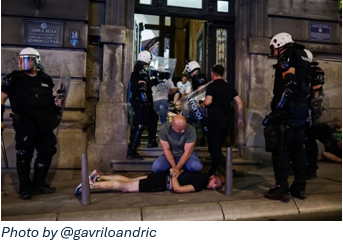
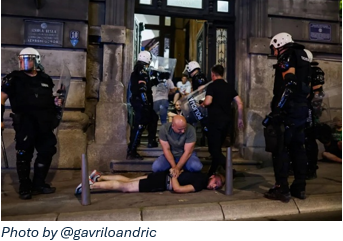
Photo by @gavriloandric
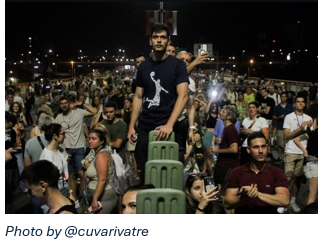
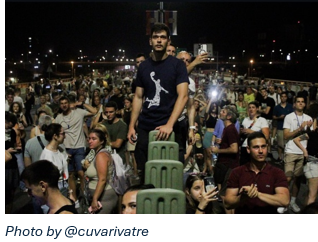
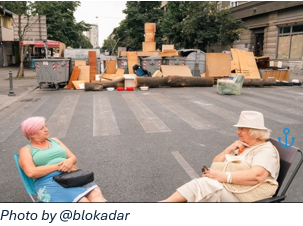
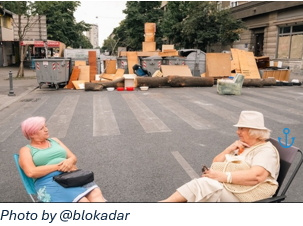
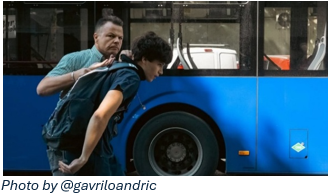
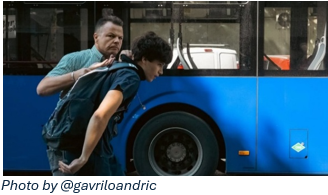
Photo by @cuvarivatre
Photo by @blokadar
Photo by @gavriloandric