
Why is fantasy so obsessed with monarchies
A semicomical investigation into the genre’s love affair with crowns, thrones, and absolutely no universal suffrage.
OPINION PIECES
Bozhidar Krasimirov Brandiyski
2/24/20268 min read
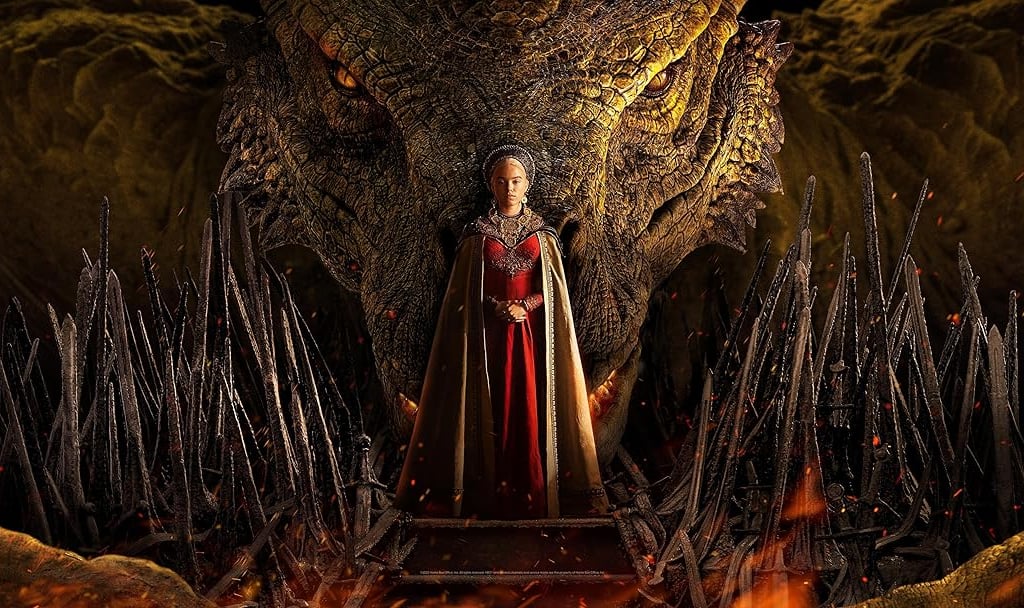
Fantasy literature is remarkably willing to question gods, prophecies, and the fabric of reality itself, yet remains strangely reluctant to question the king's and nobles' right to rule.
This part of the Mistborn trilogy illustrates what has disturbed me for years about the fantasy genre. I mean, just look at this exchange:
You wrote a clause… that lets the Assembly overthrow their king?
Yes.
And you wrote the law yourself?
Most of it.
You wrote into your own law a way that you could be deposed?
…
The Assembly invoked a no-confidence clause and chose a new king.
You bloody idiot. (Sanderson, pp. 276, 416)
Before continuing, let me put this into context so we avoid accidental slander against Brandon Sanderson, who does not deserve to be accused of promoting benevolent despotism.
In the second book of the Mistborn trilogy—The Well of Ascension—newly crowned king Elend Venture—political theorist and victim of his own reading habits—introduces a radical proto-parliamentary system to replace a thousand-year totalitarian empire. As a good reformer, he even writes a no-confidence clause. As a poor politician, he forgets that those who despise him often take advantage of no-confidence clauses.
His political opponents promptly depose him.
This is treated, both in-universe and by the narrative, as something between “tragic idealism” and “wow, you stubborn idiot.”
But surely the trilogy uses this as a springboard to examine the importance of representation and the philosophical complexity of creating a functioning social contract in a newly liberated society?
No.
In the next book, Elend pivots into becoming a military monarch, solemnly declaring that in a crisis, parliamentary deliberation is simply too slow. To be fair to Sanderson, Elend’s stance isn’t “democracy bad.” It’s more along the lines of: “We cannot hold a committee vote while the cosmic horror is actively eating the committee.” While debatable from a political-theory standpoint, it is at least understandable from a perspective of not being devoured.
The problem is what comes after the apocalypse. Once the ash stops falling and the world stops ending, you might expect the shiny new society—allegedly inspired by Elend’s philosophical ideals—to give egalitarian governance another go. Instead, the post-cataclysmic world adopts, well, an even less egalitarian system, complete with hereditary rulers, noble houses, and just enough bureaucracy to make Elend spin like an aeroplane propeller in his grave.
And the best part?
Our new protagonist in the sequel books spends about 800 pages upholding the same semi-feudal political order—not because he believes in it, but because he’s too busy solving crimes, fighting cults, and avoiding committee meetings to develop a political opinion. He complains about bureaucracy constantly, but never once pauses to wonder why he, personally, is still a hereditary lord in a supposedly modernising society.
Good job, Brandon. Truly a remarkable commitment to the bit.
This is hardly unique. Fantasy, as a genre, is generally extremely pro-monarchy, to a degree that would make even some 18th-century reactionaries cough politely and ask whether we’ve considered maybe adding an assembly somewhere, anywhere, perhaps even a cosmetic one.
I am not saying these series should be considered subpar literature because of this recurring trope. In fact, many of them I consider masterpieces. What is strange is that the genre rarely interrogates its own love of noble rule, even when fantasy authors deconstruct everything else.
Take examples:
Robert Jordan’s Wheel of Time, despite deconstructing prophecy and fate, still resolves political tensions by repeatedly installing the One True Ruler.
Andrzej Sapkowski’s The Witcher, which brilliantly mocks racial essentialism and heroic destiny, still imagines a continent where the only realistic form of governance is monarchy, along with mild war crimes.
A Song of Ice and Fire looks like a deconstruction, but even George R. R. Martin—who gleefully dismantles feudal romanticism—never offers a real alternative to absolute feudal monarchy. At best, he gestures toward proto-democratic city-states or other theocratic institutions, then promptly drops them under a pile of nude bodies and dragons.
To answer this, we must return to the foundations of modern fantasy and its founding father: J. R. R. Tolkien.
As Terry Pratchett famously observed:
J. R. R. Tolkien has become a sort of mountain, appearing in all subsequent fantasy in the way that Mt. Fuji appears so often in Japanese prints. Sometimes it’s big and up close. Sometimes it’s a shape on the horizon. Sometimes it’s not there at all, which means that the artist either has made a deliberate decision against the mountain, which is interesting in itself, or is in fact standing on Mt. Fuji (Pratchett, p.74).
This quote captures Tolkien’s influence perfectly. Modern fantasy is either consciously responding to Tolkien, quietly borrowing from him, or standing so firmly on his shoulders that it no longer realises it is doing so. Even today, fantasy works that are genuinely untouched by Tolkien’s legacy are rare enough to be determined academic curiosities.
Through The Lord of the Rings and The Hobbit, Tolkien effectively constructed the architectural blueprint of the genre: detailed worlds, ancient lore, mythic history, clearly delineated moral struggles, and—crucial to this article—legitimate kings who return at the right moment to fix everything.
Now, to be clear, this is not an argument that Tolkien’s works can be considered subpar. They are, quite obviously, among the most accomplished pieces of fantasy ever written. What becomes problematic is not Tolkien’s execution but the way his political assumptions are inherited, replicated, and rarely interrogated. This is most clearly embodied in the character arc of Aragorn in The Lord of the Rings, the genre’s most influential example of the “perfect king.”
Readers whose exposure is limited to the film adaptations might find this claim puzzling. Film-Aragorn is hesitant, self-doubting, reluctant to take up the mantle of rulership—a man burdened by history and unsure whether he deserves that amount of power. Book-Aragorn, however, is a rather different creature. He takes up the reforged sword early in the story, announces his lineage without embarrassment, and proceeds through the narrative with the quiet confidence of a man who knows that destiny has already approved his résumé.
Crucially, this is not portrayed as arrogance. Aragorn is presented and proven to be correct. His claim is legitimate, his character impeccable, and his rule unquestionable. His eventual reign inaugurates a golden age of peace and prosperity—an era so successful, in fact, that the narrative feels no obligation to explain how it works.
George R. R. Martin put these concerns most eloquently:
Tolkien can say that Aragorn became king and reigned for a hundred years, and he was wise and good. But Tolkien doesn’t ask the question: ‘What was Aragorn’s tax policy? Did he maintain a standing army? What did he do in times of flood and famine? And what about all these orcs? By the end of the war, Sauron is gone, but all of the orcs aren’t gone — they’re in the mountains. Did Aragorn pursue a policy of systematic genocide and kill them? Even the little baby orcs, in their little orc cradles? (Martin)
With this remark, Martin neatly identifies what might be called Tolkien’s political and moral philosophy: if the king is good, the land will prosper. Tolkien is not interested in governance as administration, policy, or compromise (sadly for the orcs); virtue itself is treated as a sufficient political program. Martin, by contrast, insists that history is messier, crueller, and far less impressed by personal righteousness.
Yet this is where the critique becomes delightfully uncomfortable. Because even in Martin’s own, far more cynical world of A Song of Ice and Fire, monarchy remains the unquestioned framework of governance. Kings may be incompetent, cruel, indebted, or insane; the economy may be collapsing; the realm may be on fire—but the absolute authority of the throne or the feudal fief itself is never seriously up for debate. The political struggle is over who should rule, not what restrictions it should place on its own power.
And at this point, one is tempted to ask Martin the very question he aimed at Tolkien:
What is the tax policy of Westeros, George?
Do the Lannister subjects enjoy lighter taxation because their lord’s gold mines subsidise the crown? Do the Starks tax their peasants more because they rule a region too cold to be profitable? How do free merchants, small landowners, port cities, and trade guilds even function within a system that disadvantages them more than most historical feudal European monarchies? All of these things have started wars and uprisings in the past, George!
Nevertheless, the underlying image persists. The rightful ruler, be it king or a noble—whose personal virtue, lineage, or destiny guarantees political success—remains one of fantasy’s most enduring assumptions. Later authors may complicate it, critique it, or wrap it in layers of irony, but the basic structure often survives intact: power is safest when placed in the hands of the correct person, preferably one with a sword, a bloodline, and a prophecy.
Should this be the default in fantasy?
I do not think so.
To be clear, Tolkien was not wrong to write this way. He was deliberately crafting a mythological, fairy-tale narrative, and a form of rulership based on personal virtue and legitimacy fits his project perfectly. The problem is not Tolkien. The problem is that the genre has treated Tolkien’s assumptions as if they were a template rather than a stylistic choice.
Does this model of governance fit all fantasy?
Again: no.
History offers a far richer menu of political inspiration than fantasy is usually willing to sample from. Even during the European medieval period—so beloved by fantasy worldbuilders—political authority was not uniformly feudal, hereditary, or monarchical. Merchant republics, city leagues, communal governments, ecclesiastical polities, and plutocratic regimes all coexisted, competed, and occasionally tried to kill each other over taxation, trade rights, and other petty squabbles.
In fact, the highly formalised feudal system that fantasy treats as timeless was neither universal nor static; rather, it was gradually codified over centuries of legal interpretation (Reynolds, Fiefs and Vassals, pp. 1-3). The medieval world was messy, decentralised, and politically inventive—precisely the sort of environment that fantasy claims to love.
Which raises an obvious question:
How interesting would it be to read an epic fantasy inspired not by the romanticised view of nobles about a bygone era, but by peasant wars in the Holy Roman Empire, or by the wars against merchant coalitions like the Hanseatic League—conflicts driven not by prophecy, but by trade monopolies, taxation rights, and competing visions of social order?
Fantasy is uniquely well-suited to explore conflicts that arise not merely from who should rule, but from fundamentally different ideas about how society itself should be structured. Should we sympathise with a virtuous character defending an inherited system built on hierarchy and exclusion? Or do we root for a morally ambiguous protagonist fighting for values we recognise as more just—even if their methods are less noble?
These are the kinds of tensions fantasy is capable of handling extraordinarily well. The genre thrives on moral ambiguity, competing loyalties, and world-altering stakes. Expanding its political imagination beyond crowned heads and sacred bloodlines would not dilute fantasy’s power—it would deepen it.
And, at the very least, it would finally give us a story where the fate of the realm hinges not on a prophecy, but on simple ideals.
Sources
Pratchett, Terry. “Magic Kingdoms.” In A Slip of the Keyboard: Collected Non-Fiction, edited by Rob Wilkins, Harper, 2014, pp. 73-77
Reynolds, Susan. Fiefs and Vassals: The Medieval Evidence Reinterpreted. Oxford University Press, 1994.
Sanderson, Brandon. Mistborn: The Well of Ascension. Tor, 2007.
Tabarrok, Alex. “What Was Aragorn’s Tax Policy?” Marginal Revolution, 25 Apr. 2014, https://marginalrevolution.com/marginalrevolution/2014/04/what-was-aragorns-tax-policy.html
Photo reference:
House of the Dragon (Season 1 promotional poster). 23 June 2022. FilmVandaag.nl (image credit: via HBO Max)t