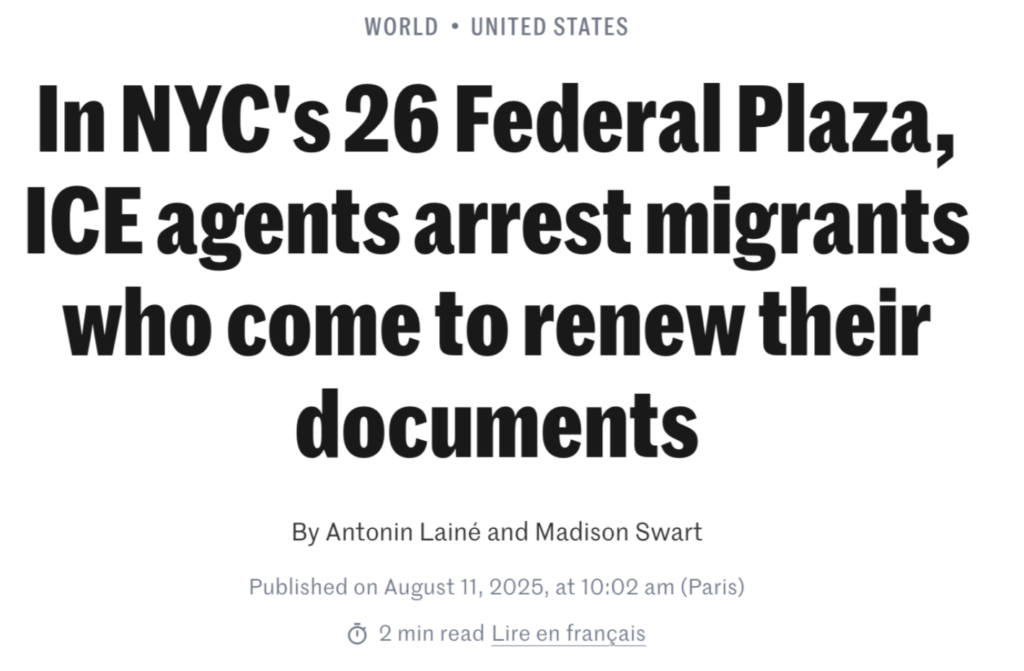
On August 23rd, 2025, while aimlessly scrolling through my phone, I come across a headline that makes my jaw drop. Shivers go down my spine as I read three capital letters typed in bold: I-C-E.
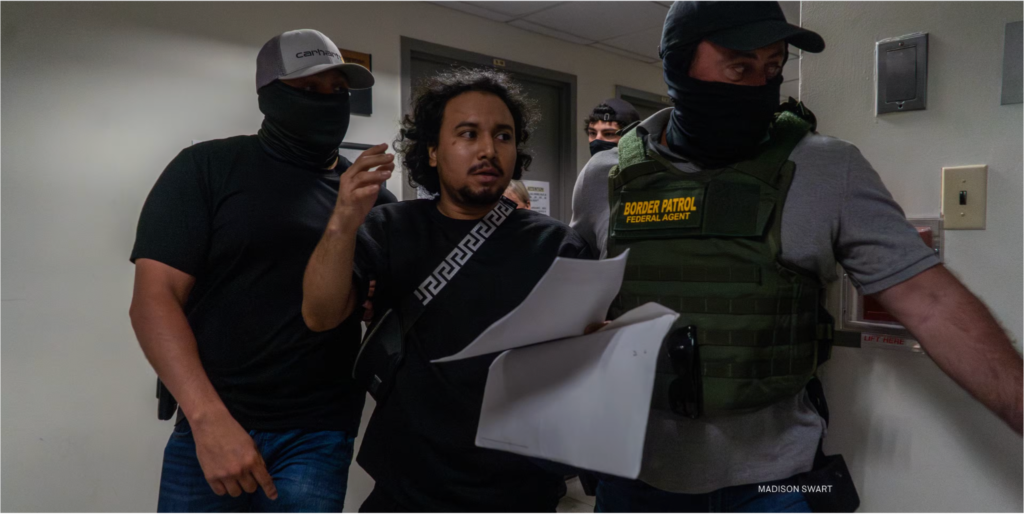
I cannot seem to take this as the truth; before my eyes, the country I have once known is crumbling to pieces. The photos of young and old desperately crying and begging, loved ones snatched by officials and faces slowly disappearing into a territory yet to be known.
I feel a tear slowly trickling down my cheek, capturing the memories of a lost time. An unpleasant voice comes creeping into my head: “it’s over,” it says. “There’s no going back.”
—
26 Federal Plaza
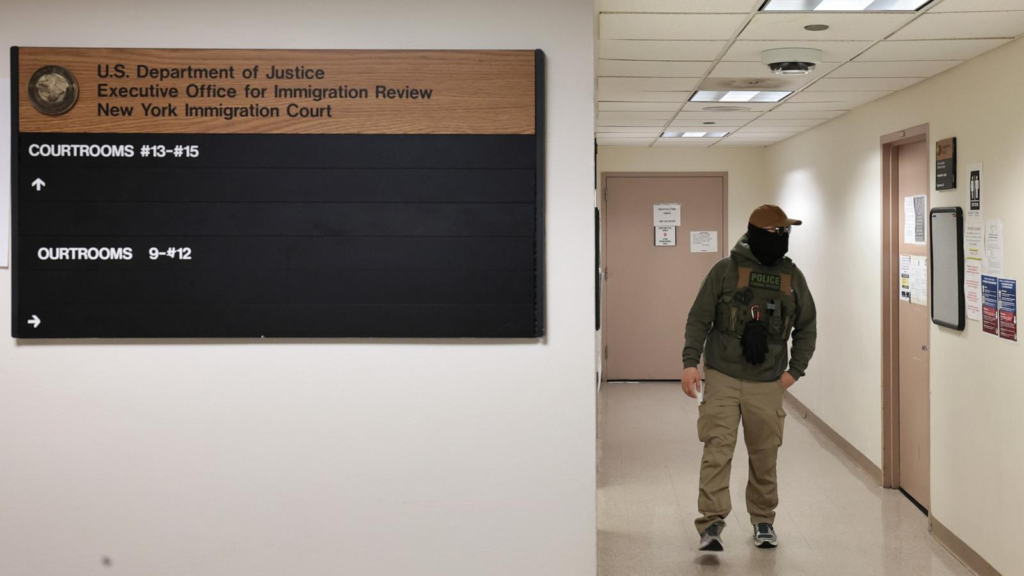
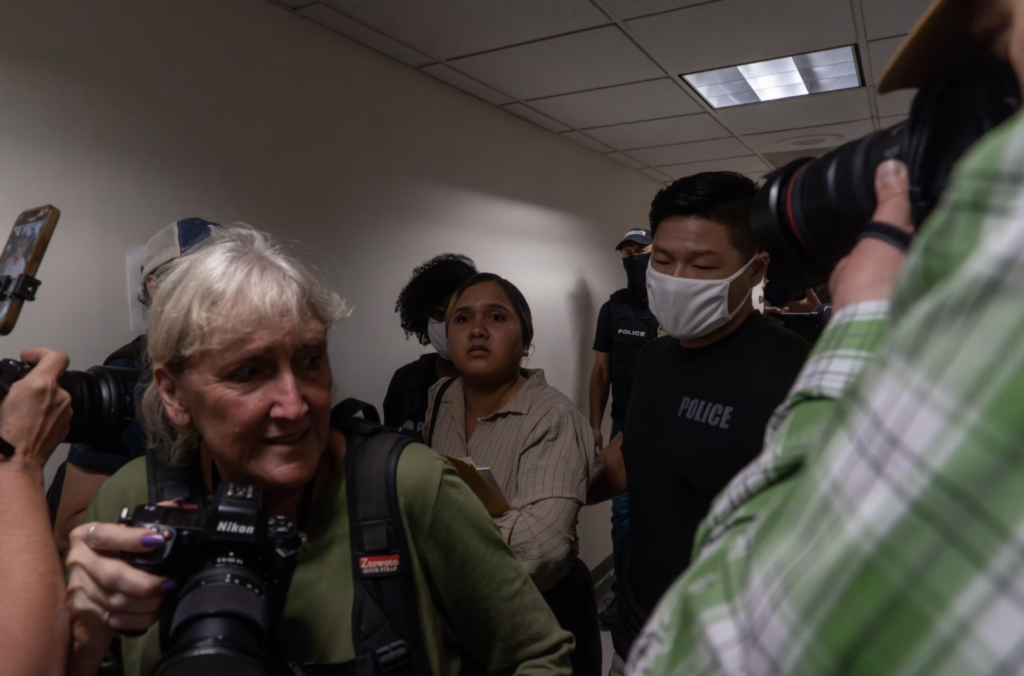
The Federal Plaza building is in the heart of New York. It houses the New York immigration service, where individuals frequently go for appointments to renew their visa status. Like 130 other buildings nationwide, the Trump administration has turned Federal Plaza into a centre for provisional detention and processing of deportees (Anderson). Visitors arriving for their appointments encounter ICE officials occupying the hallways and stairwells. If they are unlucky enough to figure on the “list” of people to expel, they are taken away and most likely never heard of again (Lainé and Swart).
During the months that followed Donald Trump’s call for “the largest Mass Deportation Program of Illegal Aliens in History” in June 2025, the U.S. Immigration and Customs Enforcement (ICE) officials conducted hundreds of arrests every day. These deportations are anything but random. Announced by President Donald Trump in his inaugural speech on January 20, 2025, these policies are part of an ideology of “othering” crafted by the Trump administration. An ideology that is dividing the country. The deportation programme specifically targets big cities, which are home to the largest concentration of Democrats in the United States (“Trump directs ICE deportations”).
—
REAL Americans
This ideology of “othering” consists in Donald Trump’s uniform definition of what it is to be American. In his Truth Social post in June, Trump claims that “Democrats are sick of mind, hate our Country, and actually want to destroy our Inner Cities”; “REAL Americans” are defined as those who are “hard-working”, love their country, and miss the “idyllic towns” of the past. To me, this vision suggests the former, exclusionary image of America; one that echoes the racial and cultural homogeneity associated with the 19th-century American South.
This lost portrait is set against what Donald Trump describes as a “Democrat”-led United States, an America whose cities are “crime-ridden and deadly”, where “millions of illegal aliens reside” and where the “welfare state” takes away the good-paying jobs and benefits from “hard-working American Citizens” (Truth Social).
—
In line with Khosravi, Trump is intentionally producing “undesirables” in the name of a nation.
Sharham Khosravi is an expert in migration and border studies, specialised in the anthropology of Iran and the Middle East. According to Khosravi, borders transform “social imaginaries and social relations”; they create a sense of “otherness” for those who do not belong. These borders are erected through speech, namely polarising discourse such as “different”, “undesired”, “dangerous”, “polluting”, and even “non-human”. Khosravi argues that borders create a “regime of visibility”; in other words, those who have come from the other side of the border are “outsiders”. Essentially, the author points to the creation of an “infrastructure of racism”, which can be applied to Trump’s rhetoric and immigration programme (Khosravi).
Among the individuals arrested over the course of May and June 2025 at the Federal Plaza, 67% had a blank criminal record: their arrest was merely based on the categorisation of “immigrant” (Lainé and Swart). Moreover, most of the visitors arrested were in fact legal on the territory, as they had come to the Federal Plaza building on appointment to renew their visa status (Lainé and Swart). According to the Wall Street Journal editorial board, 73% of individuals arrested by ICE had no criminal record (Wall Street Journal Editorial Board).
As such, a distinction is emerging in America between who is “native” and who is not. Ethnic lines are increasingly shaping the right to reside in the country; being of migrant origin, whether first, second, third, or fourth generation, is visibly a motive for arrest.
Nandita Sharma, author of the anthropological piece “Racism”, argues that race is central to “the construction of a political community”. Her notion of “native-ness” adequately describes the workings of the Trump administration. Under Trump, America can only be America if it is populated by Trump’s racialised idea of the citizen. Indeed, race is being used as a tool to construct a specific understanding of the American nation.
“As a result, ‘citizens’ have not only turned against non-citizen ‘migrants’ – as is evident in the tremendous rise of anti-immigrant legislation and everyday practices – but ‘natives’ have also turned against those co-citizens re-categorized as ‘(im)migrants’”
Sharma, Nandita. “Racism” in Anderson, Bridget and Vanessa Hughes. Citizenship & Its Others. Basingstoke, Palgrave Macmillan, 2015.
—
“Uniform” selves
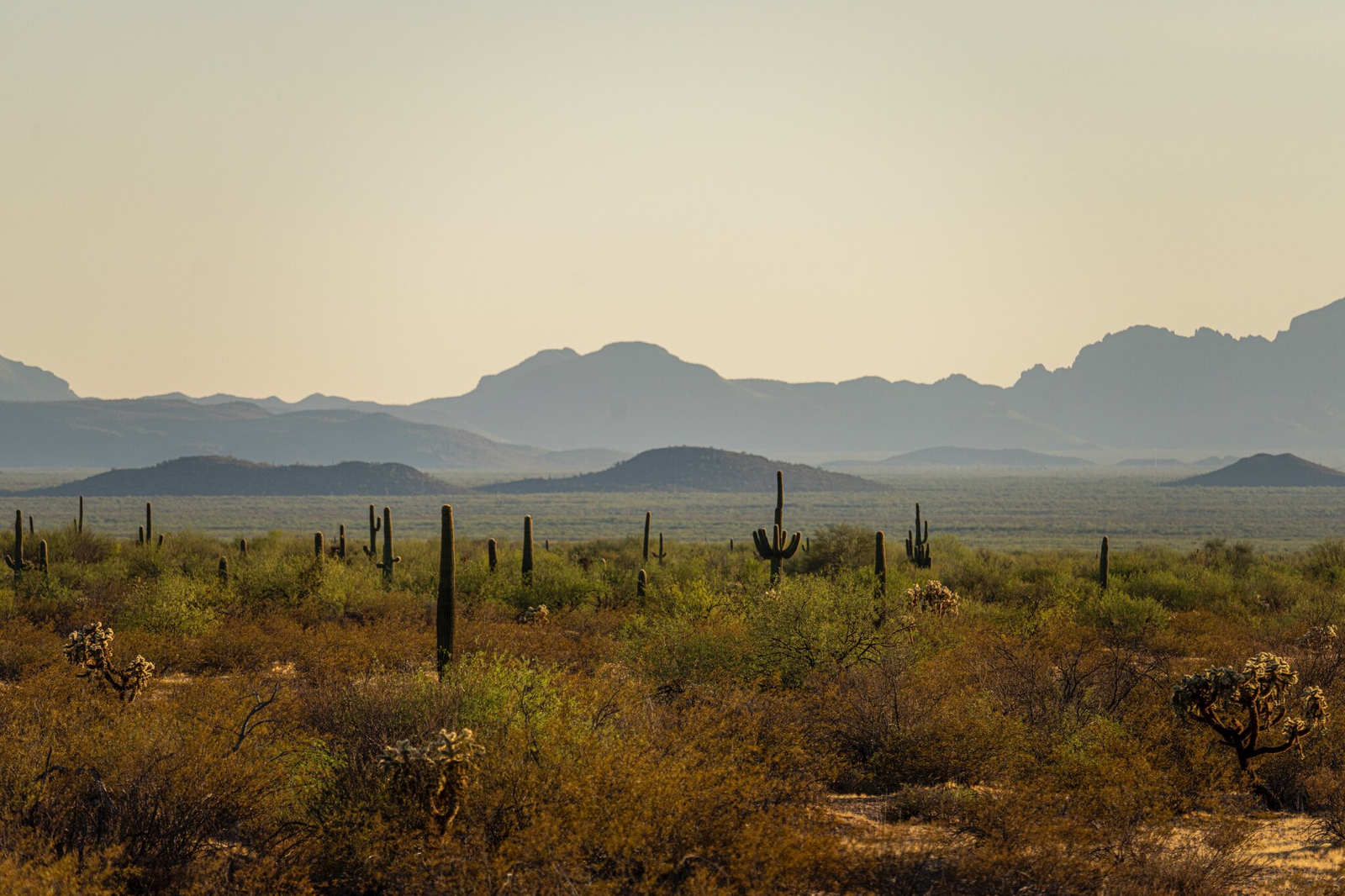
This racialised idea of the American resident does more than excuse blatantly dehumanising arrests. Perhaps the most striking are the horrors to which immigrants and deportees are left, justified by the term “deterrance”. Jason De León spent years documenting the immoral practices at work in the Sonoran Desert, located on the Mexico/Arizona border. These practices were established under the “Prevention through Deterrence” policy in the 1990s and were reinforced in silence by the Obama administration. The Sonoran Desert, located at an entrance point to the United States, is used as a “weapon” designed by authorities under “Prevention through Deterrence” to create a mass killing field for migrants (De León). The author dives into the realities of deportees left to intentional death at the border by immigration officials (De León). Much like the detention centres, these spaces are areas where individuals may face morally unacceptable treatment and are reduced to “bare life” (De León). Their status as unauthorised migrants creates a space for torture, a justification for treating these people’s lives as entirely devoid of value (De León).
“People whose loved ones have disappeared in this desert will tell you that it’s the not knowing what happened to them coupled with the flashes of grotesque possibility that drive you insane.”
De León, J. The Land of Open Graves: Living and Dying on the Migrant Trail. Oakland, California: University of California Press, 2015. [Introduction & Chapter 1].
Currently, tens of thousands of detainees are being removed from ICE detention centres, often without notice to their families. Their categorisation as “uniform others” normalises the insensibility of these individuals, whose deaths cannot be mourned; why? They do not count as “part of us”, as per President Donald Trump.
—
Drawing my eyes away from the headline, I realise: The workings of the Trump administration are nothing new. This “lost time” I recalled was only the feigned facade of inherently racist immigration restrictions. The systemic nature of exclusion becomes clear to me when I consider the 1882 Chinese Exclusion Act and the favouring of Western Europeans in the 1924 Immigration Act. The issue is not conjectural but long-term.
The current state which the U.S. is in right now calls for an interrogation of American identity at its core. Change will not come from renewed policy but through structural transformation of the ideology which has been guiding political measures for centuries. It is long overdue for an American leader to adopt an inclusive understanding of citizenship. This will come at the cost of acknowledging the systemic nature of differential inclusion, and constructing citizenship from an intersectional lens. Only then will Americans regain the freedom they have long lost.
—